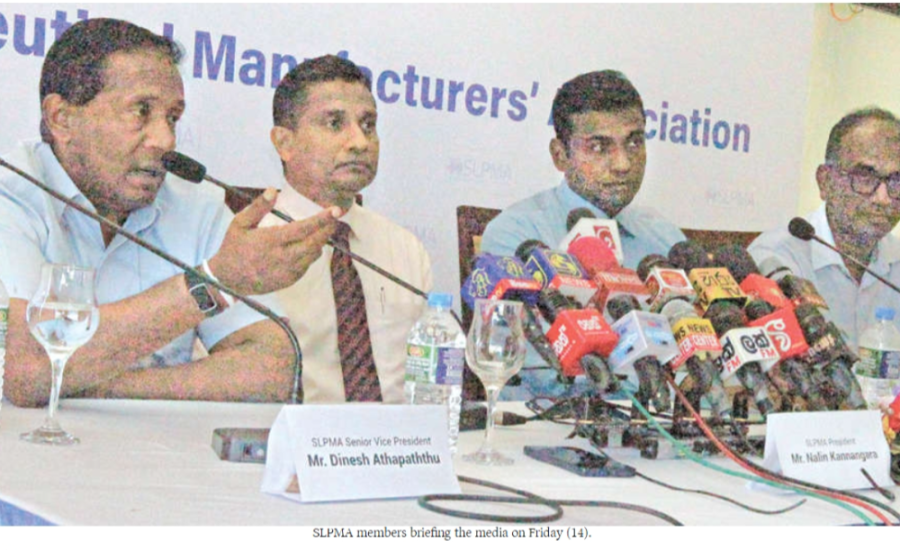
The Sri Lanka Pharmaceuticals Manufacturers’ Association on Friday (14) urged the Government to create a level playing field for them with a more favourable tax and tariff regime to compete with the international pharmaceutical suppliers.
SLPMA President Nalin Kannangara addressing the media said a range of tariff and non-tariff measures can be used to promote local pharmaceutical manufacturing and to encourage exports and give local industry relief from the competitive pressure of imports.
Kannangara also said a nearly 25 percent tax on imported ingredients, specially packaging material needed in pharmaceutical production is hampering the competitive edge of the local manufacturers as pharmaceutical imports from foreign suppliers have a zero percent tax.
“The share of local production in Sri Lanka is low. Local pharmaceutical manufacturers find it difficult to compete against the more resource-rich companies which can supply medicines at lower prices as there is no tax on pharmaceutical imports. Costs play a crucial role in the highly competitive segments of the market,” he added.
The SLPMA said the private pharmaceutical market in Sri Lanka is dominated by imports which accounts for 95 percent with local manufacturers having a share of only five percent.
The SLPMA said however in the Government sector local pharmaceutical manufacturers have a share close to 20 percent. The SLPMA said currently there are 24 local manufacturers and many companies are expanding their operations to offer a wide range of products, producing high-quality pharmaceuticals conforming to World Health Organisation standards.
The SLPMA said they are also providing lucrative employment opportunities to the youth in the field, especially science graduates.
However, the SLPMA lamented that the lack of a consistent Government policy to develop the local pharmaceutical manufacturing industry in Sri Lanka, is hampering the industries development.
The SLPMA said the development of the local pharmaceutical industry can not only save foreign exchange which goes out of the country for imports but could also bolster the county’s foreign reserves through exports.
The SLPMA said currently, Sri Lanka's pharmaceutical market is dominated by imports from India, Bangladesh and Pakistan.
The SLPMA said Sri Lanka can take Bangladesh as an example which has developed its pharmaceutical industry to reach very high standards in a relatively short period of time.
The SLPMA members said Bangladesh today has imposed import bans on 97 percent of the pharmaceuticals they produce in their country and exports products to 161 countries and the industry has become a cornerstone of their overall economic growth.
SLPMA Immediate Past President Kalana Hewamallika and Senior Vice President Dinesh Athapaththu also attended.